Pressure Makes Diamonds: Building Determination in a Skilled Career

The techs who make it aren’t the ones who had it easy. They’re the ones who figured out how to keep going. Here’s how to build that kind of resilience.

What Does Resilience Mean in a Technical Career?

Resilience in a skilled trade isn’t about being tough or never breaking down. It’s the ability to take a hit – a failed test, a rough shift, a setback you didn’t see coming – and keep moving forward anyway. It’s a skill, not a personality trait. And like every skill in a technical career, it can be learned and built over time.

The students who finish technical school and go on to build strong careers in automotive, diesel, collision repair, and HVAC are not the ones who had it easy. They’re the ones who developed the ability to get back up. Every single time.

“Pressure makes diamonds.” – A phrase that shows up again and again when TechForce students and working techs talk about what got them through the hardest parts of their training.

Why the Skilled Trades Test Your Resilience

A career in the skilled trades puts you in situations designed to push your limits. That’s not an accident – it’s how technical competency gets built. But it also means the road has real obstacles:

  • The learning curve is steep, especially in the first year of technical education
  • Mistakes have consequences – a wrong diagnosis, a missed step, a failed inspection
  • Physical fatigue compounds mental fatigue over long shifts and semesters
  • Financial pressure from tuition, tools, and living on an apprentice wage
  • Shop culture that doesn’t always reward vulnerability or asking for help
  • The gap between textbook learning and the real-world chaos of a busy bay

None of this means you’re in the wrong place. It means you’re in the right place, doing something hard. And hard is where growth lives.
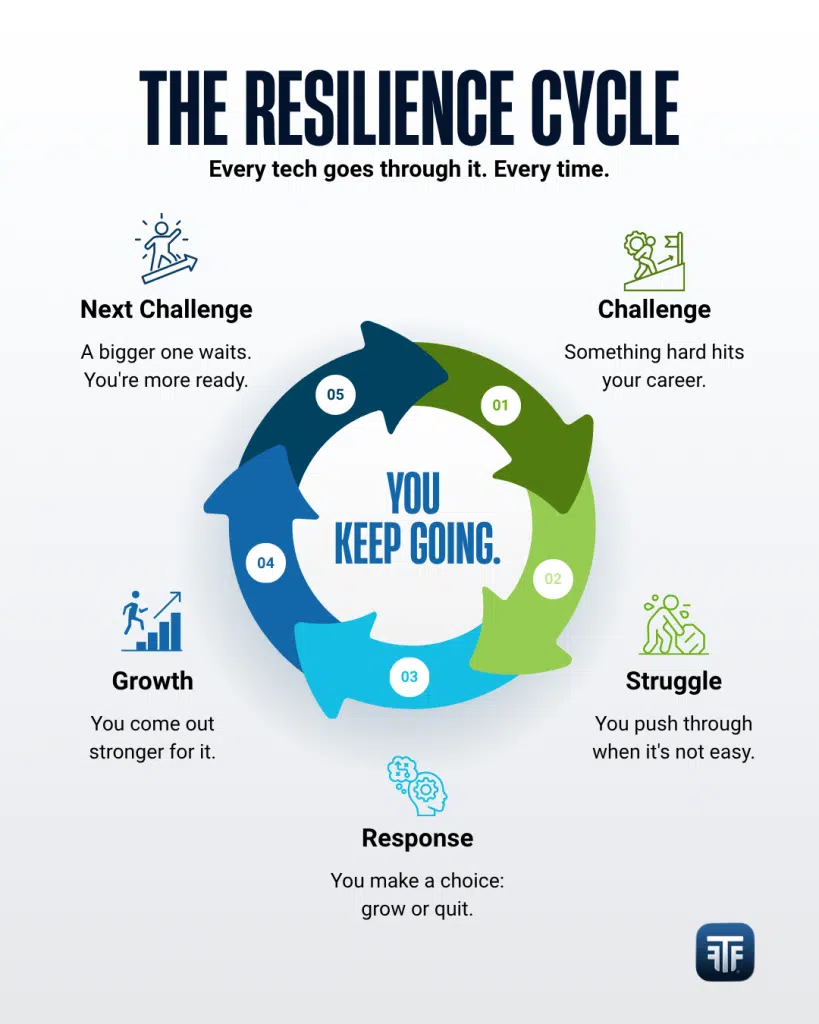
How to Respond to Common Setbacks

Resilience isn’t just a buzzword. It’s a series of choices made in specific moments. Here’s how to respond to the setbacks most techs and trade students face:

The SetbackThe Resilient Response
Failed a test or courseThis is data, not destiny. Find out what went wrong and address that specific thing. Every master tech has a failure story.
Got passed over for a raise or promotionAsk directly what it would take to get there. Turn the disappointment into a roadmap.
Made a costly mistake on the jobOwn it, learn from it, move forward. The techs who grow fastest are the ones who can face their mistakes honestly.
Got negative feedback from an instructor or shop leadFeedback is free coaching. It stings. Use it anyway.
Thought about quittingAlmost every tech has been there. The ones who stayed usually say the hardest stretch was right before it started clicking.

How to Build Perseverance for the Long Game

Technical careers are not sprints. Becoming a master technician in automotive, aviation, motorsports, or any skilled trade takes years. The students who get there are the ones who figured out how to play the long game. Here’s how:

Know Your Why

When things get hard – and they will – the clearest path through is knowing exactly why you started. Write it down. A specific reason (“I want to provide for my family,” “I want to be the best diesel tech in my state,” “I want to prove it’s possible”) is more powerful than a vague one. Come back to it on the hard days.

Reframe Failure as Data

In technical diagnostics, a wrong first guess isn’t failure – it’s information. You eliminated one possibility and moved closer to the answer. Approach setbacks in your career the same way. What did you learn? What do you eliminate next time? What gets you closer to the diagnosis?

Build a Short Memory for Setbacks

Resilient techs don’t dwell. They debrief – understand what happened and why – and then they move on. Carrying the weight of every mistake slows you down. Process it, extract the lesson, and put it down.

Set Small Targets Inside the Big Goal

A 2-year technical program is hard to see to the end when you’re in month three. Break it into quarters, months, weeks. Celebrate passing a certification. Celebrate completing a repair you’ve never done before. Small wins compound into big careers.

Surround Yourself with People Who Are Still Going

Your environment shapes your persistence. Find the students who are still showing up, the techs who are still growing, the mentors who still love the trade after 20 years. Their energy is contagious in the best way.

Overcoming Adversity: Stories from Real Techs

The most powerful evidence that resilience is learnable comes from the people who’ve done it. TechForce connects students to working techs through AMA sessions and mentorship programs – and the stories of struggle and recovery are consistent across every sector.

The pattern is almost always the same: a point where quitting felt like the only reasonable option, a decision to stay anyway, and a turning point that came shortly after. Not always because things got easier – but because the tech got better at handling hard things.

“The hardest stretch was right before it started clicking. I almost left two weeks before everything changed.” – A sentiment shared by multiple TechForce-connected technicians when talking to students about perseverance.

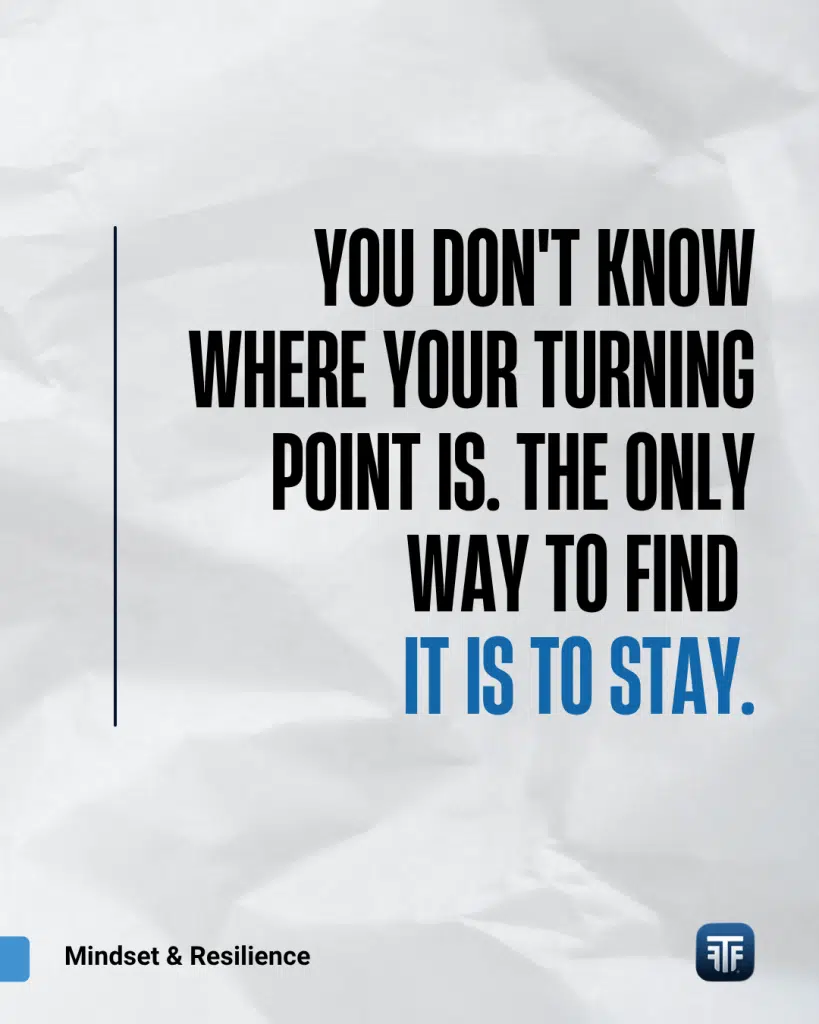
You don’t know where your turning point is. The only way to find it is to stay in the game.

How to Deal with Failure and Setbacks Without Losing Momentum

Failure is part of every skilled career. The goal isn’t to avoid it – it’s to process it faster and use it better. Here’s a simple framework:

  • Step back. Give yourself a moment before reacting. Knee-jerk responses to failure are rarely useful.
  • Get honest. What actually happened? Not the story you’re telling yourself – the facts. What went wrong and why?
  • Separate the mistake from your identity. You made an error. YOU are NOT an error. These are different things.
  • Ask one person you trust. Getting an outside perspective cuts through the distorted thinking that follows a setback.
  • Make one concrete change. Take one specific action based on what you learned. That action transforms failure into progress.

TechForce Helps You Stay in the Game

TechForce Foundation’s Wraparound Services exist because the data is clear: the students who leave technical education often don’t leave because they lack talent. They leave because of compounding pressure with no support system in place. Here’s how TechForce helps you build resilience:

  • Mentorship: Direct connections to techs who stayed in the game and built careers worth having
  • Financial support: Scholarships, emergency grants, and other financial resources that reduce the financial pressure driving dropout
  • AMA sessions: Open, honest conversations with industry professionals about the real challenges of a technical career
  • Career readiness tools: Job connections, career path maps, and life skills trainings that keep the finish line visible

Thousands of students are on the TechForce platform. You are not doing this alone. Visit TechForce.org to connect.

The Bottom Line

Resilience is not a personality type. It is a practice. Every challenge you work through in technical school is building the muscle you’ll use for the rest of your career – the ability to face a problem, stay in it, and find the answer.Pressure makes diamonds. You are in the pressure. Keep going.

Sources & Further Reading

For more information on the topics covered in this article, we recommend the following resources:

  • American Psychological Association (APA): apa.org – research on resilience, perseverance, and psychological hardiness in high-demand careers
  • National Institute for Occupational Safety and Health (NIOSH): cdc.gov/niosh – workplace stress and resilience resources for skilled trade workers

It’s Okay to Not Be Okay: Mental Health Support for Skilled Trade Students

Anxiety, depression, and stress are more common in technical careers than most people admit. Here’s how to recognize what you’re dealing with and where to get real help.

A worried woman entrepreneur in a car service shop, facing business difficulties. Bankruptcy of a small business.

Do Skilled Trade Students Struggle with Mental Health?

Yes – and more than most industries acknowledge. Students pursuing automotive, diesel, aviation, and other technical careers often carry a heavy load: tuition debt, long hours, physically demanding work, financial pressure, and the challenge of performing in a high-stakes learning environment. Mental health struggles are common, real, and nothing to be ashamed of.

The stigma around mental health in skilled trades runs deep. Shops and schools don’t always make it easy to say “I’m struggling.” But staying silent doesn’t make it better. It makes it harder to finish school, stay in the trade, and build the career you came here for.

This article is a no-judgment starting point. Whether you’re dealing with everyday stress, persistent anxiety, or something that feels much heavier, there’s support available – and you deserve to use it.

“What is the hardest part of your job, physically or mentally?” – One of the top questions TechForce students have submitted to working techs during live AMA sessions. The answer is almost never about the wrenches.

What Does Anxiety Look Like in a Technical Career?

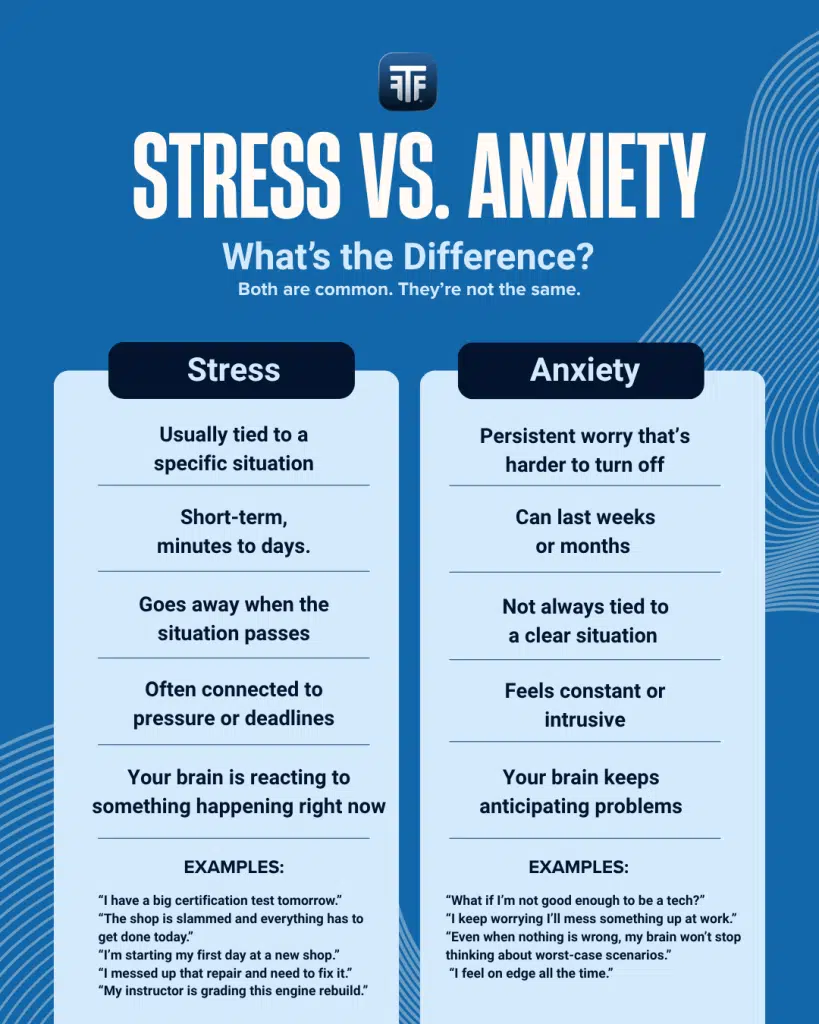
Anxiety isn’t always dramatic. In skilled trades and technical education, it often shows up quietly:

  • Constant worry about making a mistake on the job or failing a course
  • Dreading going to school or work even when things are going reasonably well
  • Difficulty concentrating on diagnostics or technical procedures you normally know
  • Physical symptoms like tension headaches, tight chest, upset stomach, or trouble sleeping
  • Avoiding asking questions or speaking up because of fear of judgment
  • Replaying interactions with instructors, coworkers, or customers over and over

High-pressure situations are built into a skilled career. Tight deadlines, complex repairs, demanding customers, and the constant expectation to perform can keep your nervous system in overdrive. For some students, that pressure becomes chronic anxiety that affects everything.

What About Depression?

Depression in students pursuing technical education often looks different from what people expect. It’s not always sadness. It can look like:

  • Losing interest in the trade you used to be excited about
  • Feeling flat or numb rather than visibly sad
  • Low energy that sleep doesn’t fix
  • Struggling to complete assignments or show up consistently
  • Withdrawing from classmates, friends, or family
  • Feeling like finishing school or building a career doesn’t matter anymore

These symptoms are not laziness, lack of motivation, or a sign that you chose the wrong career. They are signs that your brain needs support – the same way a misfiring engine needs a diagnostic, not a lecture.

Financial Stress Is a Mental Health Issue

Nearly every TechForce student entry mentions financial pressure. Paying tuition out of pocket, covering living expenses on an apprentice wage, supporting a family while going to school – this kind of sustained financial stress has real mental health consequences.

Chronic financial stress elevates cortisol, disrupts sleep, impairs focus, and increases the risk of anxiety and depression. It’s not weakness to struggle under that kind of pressure. It’s biology.

If financial stress is a major driver of what you’re feeling, there are direct resources available. TechForce offers scholarships, emergency grants, and other financial support specifically for students in technical education. Reducing the financial pressure is one of the most impactful things you can do for your mental health right now.

When Should You Seek Professional Help?

A good rule of thumb: if what you’re experiencing is interfering with your ability to function – at school, at work, or in your relationships – it’s time to talk to someone. You don’t have to be in crisis to deserve support.

Reach out to a professional if you are experiencing:

  • Anxiety or depression that has lasted more than two weeks
  • Thoughts of harming yourself or others
  • Substance use that is increasing or feels out of control
  • Panic attacks or physical symptoms with no clear medical cause
  • An inability to get through your day without significant struggle

Reaching out is not giving up. It is the smartest diagnostic move you can make.

Mental Health Resources for Trade Students

These resources are free, confidential, and available to you right now. You do not need to be in immediate crisis to use them.

ResourceHow to ReachWhat It Offers
988 Suicide and Crisis LifelineCall or text 988Free, confidential, 24/7 support for anyone in crisis or emotional distress
Crisis Text LineText HOME to 741741Text-based crisis support, available 24/7
SAMHSA Helpline1-800-662-4357Free mental health and substance use referrals and information
School CounselingVisit your school’s student services officeMost technical schools have counselors available at no cost to enrolled students
TechForce Wraparound ServicesTechForce.orgCommunity, mentorship, financial support, and connections to resources for students in technical careers

Practical Ways to Manage Anxiety Day to Day

Professional support is the most important step for serious mental health concerns. For everyday anxiety and stress, these strategies help many techs stay grounded:

Name It

Identifying what you’re feeling – “I’m anxious about this diagnostic” or “I’m overwhelmed by my schedule” – takes power away from the feeling. Naming it is the first step to managing it.

Control What You Can

Anxiety feeds on uncertainty. Focus your energy on the things within your control: your preparation, your attitude, your effort. Let go, as much as possible, of what you can’t control.

Build One Consistent Routine

Consistency is calming to a stressed nervous system. A reliable sleep schedule, a regular meal, a short walk between school and work – even one predictable anchor in your day makes a difference.

Lean on Your Community

Isolation makes anxiety worse. Connecting with other students in skilled trades, finding a mentor through TechForce, or simply talking to one person you trust can break the cycle faster than trying to manage everything alone.

TechForce Support for Your Mental Health

TechForce Foundation’s Wraparound Services include resources that directly address the conditions that contribute to mental health struggles in technical education:

  • Financial relief: Scholarships, emergency grants, and other financial resources to reduce financial pressure
  • Mentorship: Connections to working techs who understand the real pressures of a technical career
  • Life skills trainings: Sessions covering stress management, time management, and mental health awareness – all ranked by students
  • AMA sessions: Open conversations with industry professionals about the hard parts of a skilled career

TechForce is not a mental health provider, but we are part of your support system. Visit TechForce.org to connect with the resources and community available to you.

The Bottom Line

Mental health support is not separate from career success. It is part of it. The students who finish technical school and build lasting skilled careers are not the ones who never struggled. They are the ones who got help when they needed it, stayed connected to their community, and kept showing up.

You are allowed to not be okay sometimes. You are also allowed to ask for help. Both of those things are true at the same time.

Sources & Further Reading

For more information on the topics covered in this article, we recommend the following resources:

  • 988 Suicide and Crisis Lifeline: 988lifeline.org – free, confidential crisis support available 24/7 by call or text
  • Crisis Text Line: crisistextline.org – free, confidential text-based crisis support, text HOME to 741741
  • SAMHSA National Helpline: samhsa.gov – free mental health and substance use referrals, 1-800-662-4357
  • National Alliance on Mental Illness (NAMI): nami.org – mental health education, support, and resources for individuals and families

American Psychiatric Association:psychiatry.org – clinical information on anxiety, depression, and when to seek professional help

Running on Empty: How to Recognize and Recover from Technician Burnout

Burnout in the skilled trades is more common than anyone admits. Here’s how to spot it early, protect your career, and get back to doing the work you love.

The Trade Nobody Warns You About

Everyone talks about the physical demands of a skilled career in automotive, diesel, aviation, etc.. The long hours on your feet. The heavy lifts. The tight spaces. What they don’t talk about as often is what happens to your mind when the grind never stops.

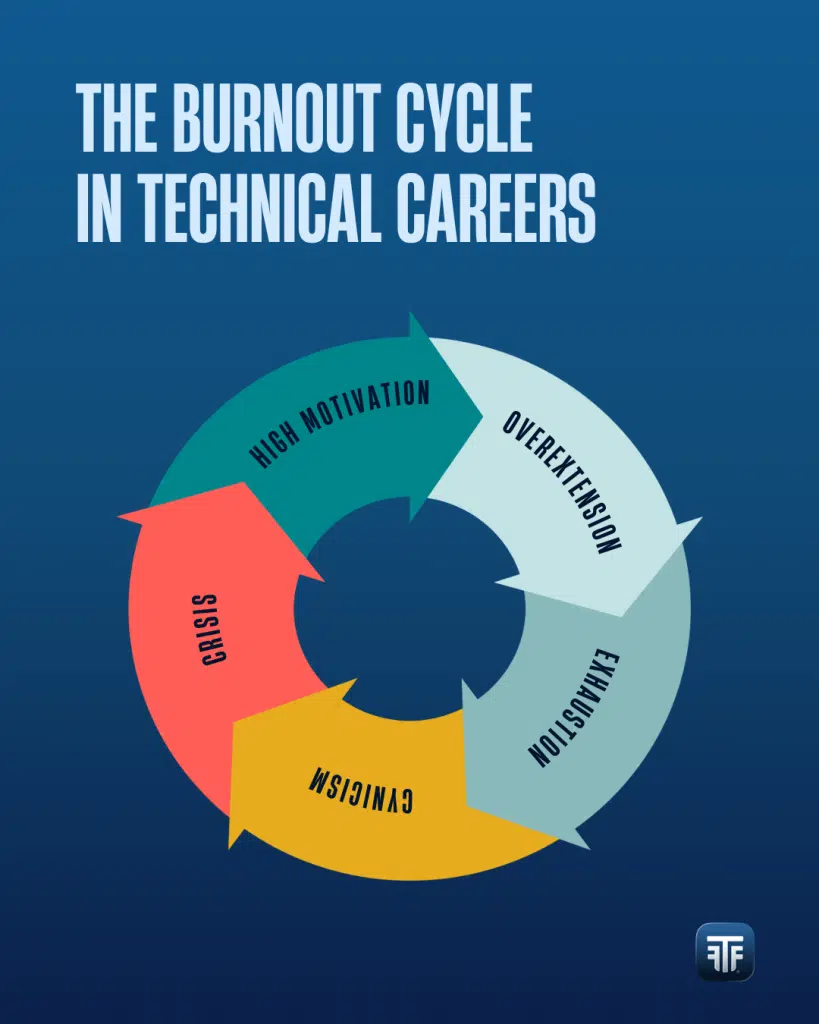
Burnout is one of the leading reasons skilled technicians leave the trade – or never finish school. And the scary part is that it rarely announces itself. It creeps in slowly, disguised as tiredness, frustration, or just “having a bad week.”

If you’re pursuing a technical career while juggling school, a job, family, and financial pressure, this article is for you.

“When you were in a bad spot mentally, how did you overcome that?” and “What is the hardest part of your job physically or mentally?” – Among the most common questions TechForce students ask industry professionals during live AMA sessions.

What Is Burnout, Really?

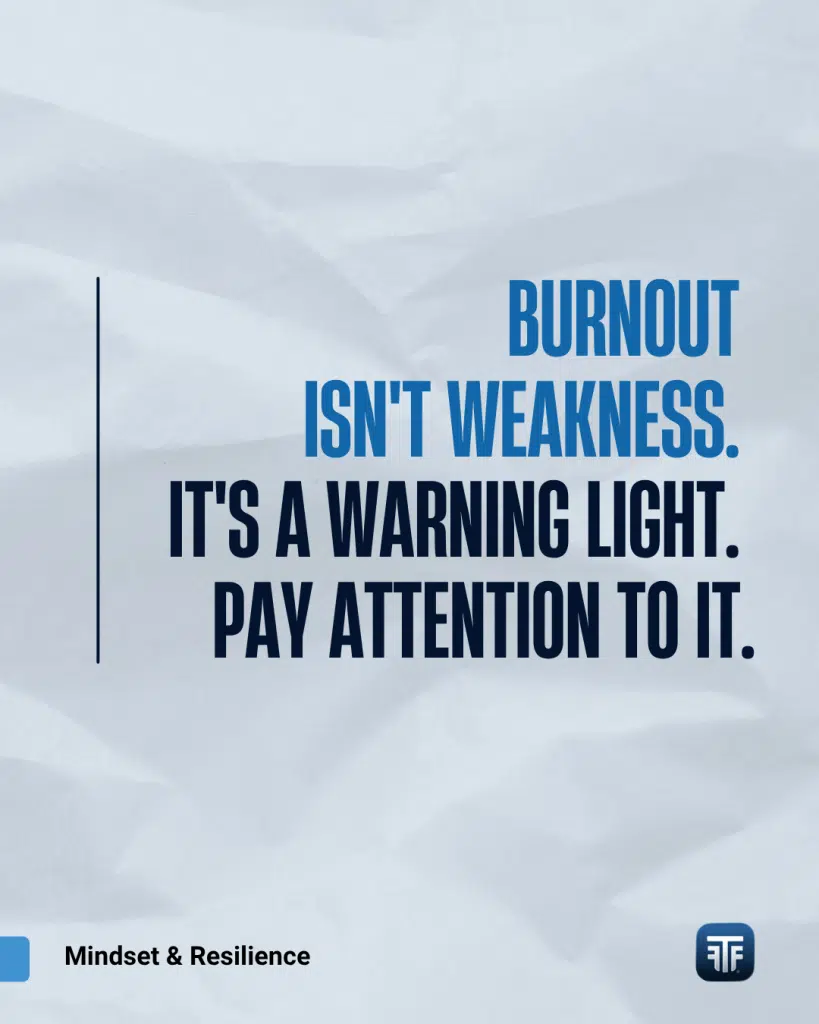
Burnout isn’t just being tired. It’s a state of chronic stress that leads to physical and emotional exhaustion, cynicism about your work, and a feeling that nothing you do makes a difference. The World Health Organization recognizes it as an occupational phenomenon – meaning it’s a real, documented condition, not a personal weakness.

For students in technical education and working techs, burnout often builds from a combination of factors:

  • Long hours split between school, work, and personal responsibilities
  • Financial stress from tuition, tools, and living expenses on an apprentice wage
  • A shop culture that sometimes rewards pushing through pain over taking care of yourself
  • The physical toll of hands-on technical work on your body
  • Feeling isolated, especially if you’re a first-generation student or from an underrepresented group in the trades

The Warning Signs: What Burnout Actually Looks Like

Most techs push through warning signs for months before hitting a wall. The earlier you catch it, the easier it is to address. Here’s what to watch for:

CategoryWarning Signs
PhysicalConstant fatigue even after rest, frequent headaches, soreness that doesn’t go away, getting sick more often than usual
EmotionalDreading every shift, feeling numb or detached, snapping at coworkers or customers, losing pride in your work
MentalStruggling to focus, making more mistakes than usual, forgetting steps you normally know cold
BehavioralSkipping school or calling out of work repeatedly, isolating yourself, turning to alcohol or other substances to decompress

If several of these sound familiar, you’re not weak and you’re not alone. You’re human. And there are real, practical things you can do right now.

How to Prevent Burnout Before It Starts

Protect Your Off Time Like It’s Part of the Job

Recovery isn’t optional in a physical career – it’s maintenance. The same way you wouldn’t skip an oil change, you can’t skip rest. Set hard boundaries around time off when you can. Even 30 minutes of genuine downtime can reset your nervous system before the next shift.

Pay Attention to Your Body

Technical careers put real demands on your body. Proper lifting technique, ergonomic positioning, and staying on top of minor soreness before it becomes injury are all part of a long career. Body mechanics matter as much as technical skills.

Talk About It

Shop culture doesn’t always make it easy to say “I’m struggling.” But holding it in makes it worse. Find one person you trust – a classmate, a mentor, a family member – and say it out loud. Saying “I’m burning out” is the first step to stopping it.

Address the Financial Pressure Directly

A huge driver of burnout for students in technical education is financial stress. Working extra shifts to cover rent while keeping up with coursework is a fast track to exhaustion. TechForce offers scholarships, emergency grants, and other financial support specifically designed to reduce this pressure. You don’t have to white-knuckle it through school.

If You’re Already Burned Out: A Path Back

Recovery from burnout doesn’t happen in a weekend. It’s a process. But it’s absolutely possible, and plenty of skilled techs have come back stronger after hitting a wall. Here’s where to start:

Step 1: Acknowledge It

Stop calling it “just tiredness” or “a rough patch.” Name it. Burnout. That’s the first and hardest step, and it’s the one that makes the rest possible.

Step 2: Identify the Biggest Source

Is it financial stress? Physical exhaustion? Feeling unsupported at your school or shop? Loneliness? Pinpointing the main driver helps you address the right thing instead of spinning in circles.

Step 3: Ask for Help

This might mean talking to a school counselor, reaching out to TechForce for financial support or community connections, or seeking professional mental health support. None of these are signs of failure. All of them are signs of a tech who wants to stay in the game.

Step 4: Rebuild Small

You don’t fix burnout all at once. Pick one thing to change this week – one boundary to set, one hour to protect, one conversation to have. Small resets compound over time.

Keeping the Drive: Long-Term Motivation in a Skilled Career

Burnout prevention isn’t just about managing stress. It’s about staying connected to why you started. The automotive technician shortage is real – America needs nearly 1 million new entry-level techs by 2028, and there are 3 to 7 job openings for every graduate in multiple sectors. The demand for what you’re training to do has never been higher.

That’s not a small thing. On the hard days, remember: skilled careers in automotive technology, diesel mechanics, aviation, collision repair, HVAC, and more offer strong wages, long-term stability, and real respect. The path is worth finishing.

“How do you keep the same drive and stop yourself from getting burnt out?” – TechForce student, submitted to a master tech AMA session.

The answer from every experienced tech comes back to the same thing: find your community, stay connected to your purpose, and don’t try to do it alone.

Practical Work-Life Balance Strategies for Techs

These aren’t generic wellness tips. These are specific to the reality of a technical career:

  • Schedule recovery like a shift. Put it in your calendar. If it’s not scheduled, it doesn’t happen.
  • Use your lunch break to actually eat. Skipping meals to keep working is a short-term trade that costs you long-term.
  • Learn to say no to one thing a week. One declined obligation creates breathing room.
  • Move your body off the clock, but gently. A short walk does more for recovery than collapsing in front of a screen.
  • Connect with other students in skilled trades. Shared experience cuts isolation fast.
  • Track your wins. Burnout distorts your perception. A log of what you’ve accomplished is an antidote to the feeling that nothing is working.

TechForce Support for Students Experiencing Burnout

TechForce Foundation’s Wraparound Services were built around one simple idea: students in technical education and skilled careers shouldn’t have to white-knuckle it through the hard parts alone. Here’s what’s available:

  • Financial relief: Scholarships, emergency grants, tool giveaways, and more help reduce the financial pressure driving burnout
  • Mentorship: Connections to working techs who’ve been where you are and came out the other side
  • Life skills trainings: 350+ sessions covering time management, mental health, financial literacy, and career readiness – ranked by students
  • AMA sessions: Direct access to industry professionals who answer real questions about the hard (and fun) parts of a technical career

You don’t have to earn your way to support. It’s already here, at TechForce.org.

The Bottom Line

Burnout in the skilled trades is real, it’s common, and it’s survivable. The techs who make it to master level aren’t the ones who never struggled. They’re the ones who learned to take care of themselves the same way they take care of the vehicles in their bay: with regular maintenance, early attention to warning signs, and the right tools for the job.

You’ve got this. And you’ve got backup.

Sources & Further Reading

For more information on the topics covered in this article, we recommend the following resources:

  • World Health Organization (WHO): who.int – occupational burnout classification, definition, and workplace mental health resources
  • 988 Suicide and Crisis Lifeline: 988lifeline.org – free, confidential crisis support available 24/7 by call or text
  • National Institute for Occupational Safety and Health (NIOSH): cdc.gov/niosh – workplace stress, physical wellness, and occupational health resources for skilled trade workers

You Belong Here: Building Real Confidence as a New Tech

Imposter syndrome is real, but it doesn’t have to run your career. Here’s how to build genuine self-esteem in the shop from day one.

The Feeling Nobody Talks About

You passed your courses. You landed the apprenticeship. You’re standing in the shop, and suddenly you feel like everyone can tell you have no idea what you’re doing.

That feeling has a name: imposter syndrome. Nearly every technician, from first-year apprentices to master techs, has felt it at some point.

The difference between the techs who stick it out and the ones who walk away isn’t talent. It’s what they do with that feeling.

“When you were in a bad spot mentally, how did you overcome that?” – A frequently asked question TechForce students submitted to a master tech during a live AMA.

You Are Not Starting From Scratch

TechForce Foundation currently supports thousands of students on its career-readiness platform. Here’s who those students actually are:

  • 42% are the first in their family to pursue postsecondary technical training
  • 23% report learning differences such as ADHD or dyslexia
  • 59% identify as people of color or multiethnic
  • 8% are veterans making a career transition into the skilled trades

Those numbers matter. You are not alone, and you never were. The automotive technician shortage is real – America needs nearly 1 million new entry-level technicians by 2028 – and that means the industry needs you. Every one of you.

What Is Imposter Syndrome, and Why Do Techs Get It?

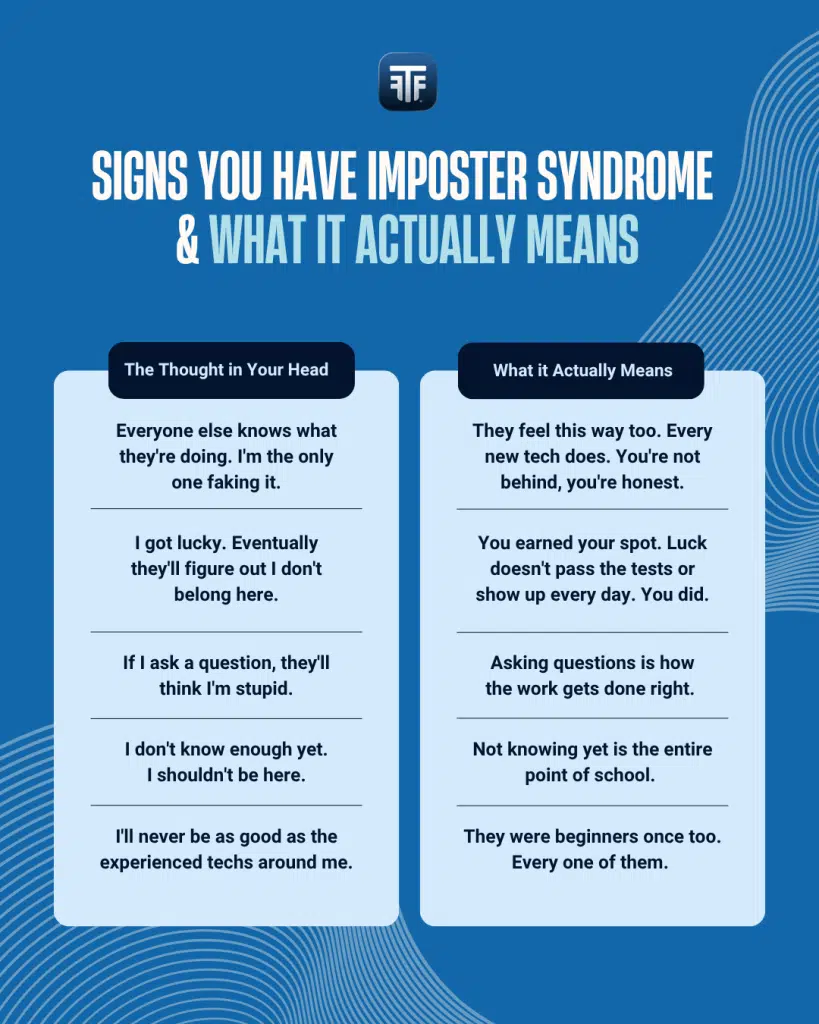
Imposter syndrome is the internal experience of believing you’re not as competent as others perceive you to be. In a skilled career, it often sounds like:

  • “Everyone else knows what they’re doing. I’m the only one faking it.”
  • “I got lucky. Eventually they’ll figure out I don’t belong here.”
  • “If I ask a question, they’ll think I’m stupid.”

Sound familiar? This is especially common for:

  • First-generation students who didn’t grow up around cars, diesel, or aviation
  • Techs from underrepresented groups who rarely see people like themselves in the shop
  • Apprentices who’ve only seen the textbook version, not the real-world chaos of a busy bay
  • Career changers who are used to being the expert in their previous field

The Truth About Being a Beginner

Here’s what the master techs don’t always say out loud: everybody starts at zero. The tech who’s been turning wrenches for 20 years once stared at an engine and had no clue where to begin.

The skilled trades are built on a progression. There’s a reason it’s called an apprenticeship: you are supposed to be learning. Asking questions isn’t weakness. It’s how the work gets done right.

“My dream is to become a level 3, master diesel technician. I wish to make good money and provide great service to my customers.” – TechForce student

That dream is valid. And it starts exactly where you are right now. Skilled careers in automotive technology, diesel mechanics, aviation, and collision repair offer strong wages and real long-term stability. The path forward exists. You just have to stay on it.

5 Ways to Build Real Confidence in the Shop

1. Document Your Wins, Even the Small Ones

Confidence is built on evidence. Start keeping a simple log of things you did right: a repair you completed without help, a customer who thanked you, a question you answered correctly. When imposter syndrome flares up, look at the list.

2. Get Comfortable Saying ‘I Don’t Know Yet’

The most dangerous tech in a shop is the one who pretends to know things they don’t. A confident tech can say, “I haven’t seen that before, let me check” or “Can you walk me through that?” That’s professionalism, not ignorance.

3. Find Your People

Community matters enormously in technical careers. When you’re surrounded by people who understand what you’re going through (other students, women in the skilled trades, veterans making a career change), the loneliness of imposter syndrome shrinks fast. TechForce connects students to like-minded circles across automotive, diesel, aviation, and more.

4. Replace Comparison with Curiosity

Instead of watching another tech and thinking “I’ll never be that good,” try: “What would I need to learn to get there?” Comparison is a dead end. Curiosity is a career path.

5. Talk to a Tech Who Struggled Early

Nothing cuts through imposter syndrome like hearing a master tech say, “Yeah, I had no idea what I was doing my first year either.” Find a mentor. Ask the question. You’ll be surprised what they share.

Rewiring Your Inner Voice

Self-esteem isn’t about fake positivity. It’s about accurate thinking. Here’s a practical reframe for the most common negative self-talk patterns techs experience:

Instead of thinking…Try thinking…
“I’m not good enough.”“I’m building skills every single day.”
“Everyone else gets it but me.”“They’ve had more time. I’ll get there too.”
“I shouldn’t have gotten this opportunity.”“I earned this chance. Now I’ll make the most of it.”
“If I fail at this, it’s all over.”“One mistake doesn’t define my career.”

When It Goes Deeper Than Confidence

Sometimes what feels like imposter syndrome is something more. If you’re experiencing persistent anxiety, depression, or thoughts of self-harm, that’s not a mindset problem. It’s a health issue, and you deserve real support.

  • Talk to a counselor at your school – most programs have resources available
  • Contact the 988 Suicide and Crisis Lifeline (call or text 988) for immediate support
  • Reach out to TechForce – we can connect you to wraparound support services

There’s no weakness in asking for help. The best techs know when to call in backup.

TechForce Resources for Students in Skilled Careers

TechForce Foundation offers far more than automotive scholarships and grants. Our Wraparound Services are built around what students actually need to make it through technical education and into a skilled career:

  • Mentorship connections through the TechForce platform, linking students with working techs
  • AMA sessions with master techs and industry leaders, on topics you actually care about
  • 350+ life skills trainings available on the platform and ranked by students

Thousands of students are already on the platform. Scholarships for technical schools, career readiness tools, job connections, and community are all waiting for you at TechForce.org.

The Bottom Line

Self-esteem in the shop isn’t built overnight. It’s built one completed repair at a time. One question asked. One skill learned. One moment where you realize: I can actually do this.

You chose a skilled career that keeps the world moving. That matters. You matter. And you belong here, not someday, but right now.

Sources & Further Reading

For more information on the topics covered in this article, we recommend the following resources:

  • 988 Suicide and Crisis Lifeline: 988lifeline.org – free, confidential mental health crisis support available 24/7 by call or text
  • National Alliance on Mental Illness (NAMI): nami.org – mental health education, support groups, and resources for individuals and families
  • American Psychological Association (APA): apa.org – research and resources on imposter syndrome, self-esteem, and workplace mental health

Please share your contact details and a TechForce team member will contact you.


"By connecting students, instructors, industry pros and working techs, the TechForce Foundation provides unilateral support to the transportation industry’s technician recruiting needs… The administration of our Scholarships by the TechForce team has been instrumental in delivering us with a successful method to gain interest from qualified candidates as well as provide our students with additional assistance to complete their education."
Tony Farr
Ford Technical Programs Manager