
Rent, a reliable vehicle, and a manageable commute are not luxuries – they’re the foundation that keeps you in the program. Here’s how to manage both on a trade student budget.

Why Housing and Transportation Matter More Than You Think
Missing class or a shift because of a housing crisis or a broken-down vehicle ends careers before they start. In the skilled trades, reliability is everything – and reliability starts before you ever walk through the shop door.
Trade students face a specific set of challenges here. Technical programs are often located in areas where affordable housing is limited. Shops and schools usually require early start times that don’t align well with public transit schedules. And the first months of an apprenticeship – before regular paychecks are established and before you know the area – are almost always the hardest financially.
Getting housing and transportation right early isn’t just about comfort. It’s about staying enrolled and staying employed long enough to build the career you came here for.
Reliability is the first thing a shop notices about a new tech. Getting there on time, every day, is a skill in itself – and it starts with having a stable place to sleep and a way to get there.
Housing: Finding Something That Works on a Trade Student Budget
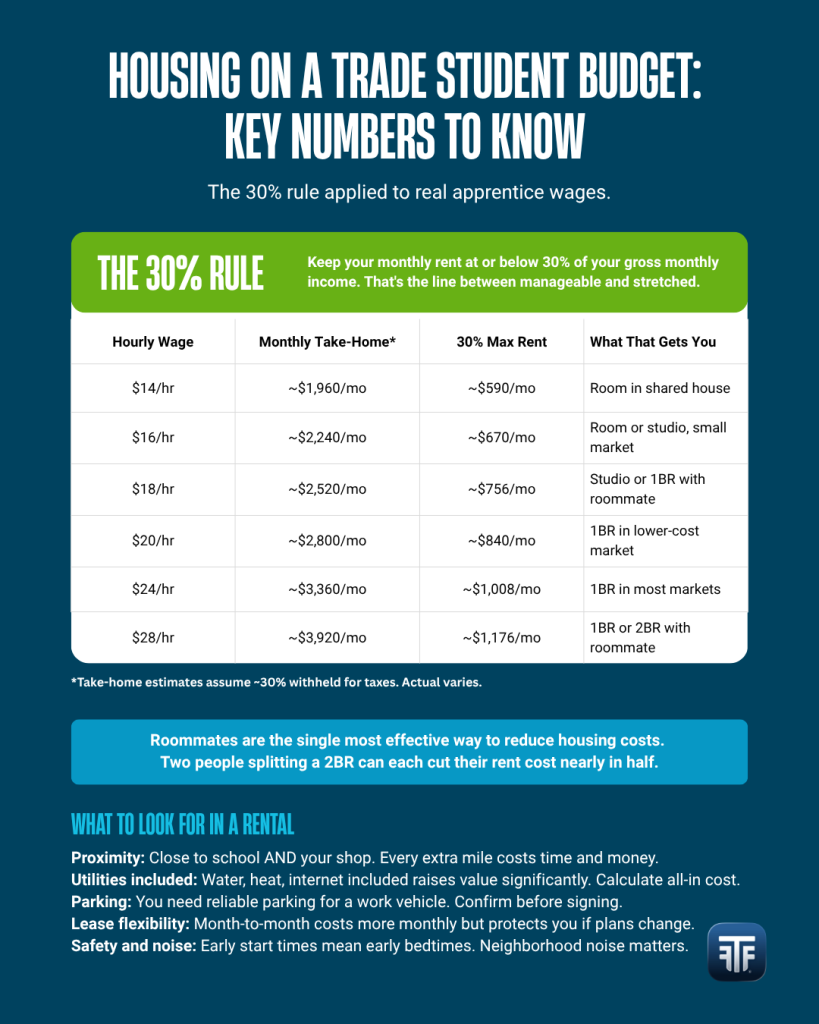
Know Your Numbers Before You Sign Anything
The general rule of thumb for housing costs is to keep rent at or below 30% of your gross monthly income. On an apprentice wage of $14-$18 per hour, that works out to roughly $700-$900 per month for rent. In many markets that’s tight – which means trade students often need to be creative about their living situation, at least in the early years.
- Roommates: Splitting a two or three-bedroom with other students or working adults is the single most effective way to reduce housing costs without relocating. Many tech schools have student boards or housing resources to help connect students looking to share.
- Proximity vs. cost tradeoffs: A cheaper apartment that adds 45 minutes to your commute may end up costing more in fuel, vehicle wear, and lost sleep than a slightly more expensive place that’s closer to school or your shop.
- Utilities included: When comparing rentals, factor in what’s included. A higher-rent unit with water, heat, and internet included may be cheaper all-in than a lower-rent unit where you’re covering everything separately.
- Month-to-month vs. lease: If you’re new to an area or unsure where you’ll land a job after graduation, a month-to-month rental gives you flexibility – even if the monthly rate is slightly higher.
Rental Assistance and Housing Support Programs
If you’re struggling to cover rent, several programs exist to help – most of them through local and state agencies rather than the federal government directly:
- 211.org: Dial 2-1-1 or visit 211.org to find local housing assistance, emergency rental support, and utility programs in your area. This is the fastest way to find what’s available where you live.
- HUD Rental Assistance: The U.S. Department of Housing and Urban Development (hud.gov) administers rental assistance programs including Section 8 housing vouchers. Waitlists can be long, but it’s worth applying early if you anticipate ongoing housing cost pressure.
- Community Action Agencies (CAP agencies): Local CAP agencies offer emergency rental assistance, utility help, and other support for low-income households. Find your local agency at communityactionpartnership.com.
- State emergency rental assistance: Many states have their own rental assistance programs separate from federal programs. Search “[your state] emergency rental assistance” to find what’s currently available.
- Salvation Army and local nonprofits: Many local Salvation Army chapters and community nonprofits offer one-time emergency housing assistance for people at risk of eviction. Call your local chapter directly.
Transportation: Keeping Yourself Moving
Your Vehicle Is a Work Tool
For most trade students, a personal vehicle isn’t optional – it’s how you get to school, to your shop, and eventually to job sites. Treat it accordingly. That means staying on top of maintenance, keeping insurance current, and having a plan for when something goes wrong.
The particular irony of trade school is that you’re learning to fix vehicles while driving one that probably needs work. Use that to your advantage where you can – ask instructors about student repair days, find out if your program has access to shop time for student vehicles, and connect with classmates who have complementary skills.
Buying a Reliable Vehicle on a Limited Budget
If you need to purchase a vehicle, resist the pressure to finance more than you can comfortably afford. A $4,000-$7,000 used vehicle that you can maintain yourself will almost always serve a trade student better than a newer vehicle with a monthly payment that strains your budget every month.
- Prioritize reliability over appearance: High-mileage vehicles from brands with strong reliability records are often better value than lower-mileage vehicles from brands with higher repair costs.
- Get a pre-purchase inspection: Before buying any used vehicle, pay a trusted mechanic (or ask an instructor) to inspect it. A $100 inspection can save you from a $3,000 mistake.
- Factor in insurance before you buy: Call your insurer with the VIN before committing. Insurance costs vary significantly by vehicle type, age, and your driving history.
- Avoid buy-here-pay-here lots: High interest rates and unreliable vehicles make these a last resort. Credit unions often offer better rates for used vehicle loans, even for borrowers with limited credit history.
When Your Vehicle Breaks Down
It will happen. Having a plan before it does makes the difference between missing one day and missing a week. A few things to have ready:
- Keep one trusted mechanic’s number saved – someone who will give you an honest assessment and won’t upsell unnecessary repairs
- Know your school’s attendance policy for vehicle-related absences and communicate early – most instructors respond better to a heads-up than to a no-show
- Identify a backup transportation option in advance: a classmate who lives nearby, a bus route that gets you close, a rideshare budget for emergencies
- If the repair cost threatens your ability to stay enrolled, check whether you qualify for TechForce’s Life Happens Grant (available at select schools – see below)
Public Transit and Alternative Transportation
Public transit isn’t always viable for trade students – early start times, suburban or rural school locations, and the need to carry tools all work against it. But where it is an option, it’s worth the tradeoff on days when driving isn’t possible.
- Student transit discounts: Many local transit authorities offer reduced fares for enrolled students. Check with your school’s student services office – discounted passes are sometimes available directly through the campus.
- Carpooling with classmates: A coordinated carpool arrangement with one or two classmates reduces fuel costs significantly and provides a built-in backup when one vehicle is out of commission.
- Employer shuttle programs: Some larger dealerships and fleet operations run shuttle or vanpool programs for employees. Ask during your job search whether this is available.
TechForce Support: What’s Available and What to Expect
TechForce offers some programs that can help with housing and transportation costs – but it’s important to understand that both are currently available at select schools only. If you’re facing a housing or transportation crisis, check the TechForce platform or ask your campus Student Services department to find out whether your school participates before counting on these funds.
- Strong Start (Relocation and Startup Fund): Designed to help students who need to relocate to attend a program or who face significant startup costs at the beginning of their training. Available at select participating schools.
- Life Happens Grant (Student Emergency Fund): For sudden, unexpected emergencies that threaten your ability to stay enrolled – including urgent vehicle repairs and emergency housing expenses. Not for routine tuition or planned relocation costs. Available at select participating schools.
The Bottom Line
Housing and transportation are the unsexy parts of building a technical career – but they’re the foundation everything else sits on. A plan that keeps your rent manageable, your vehicle running, and your commute predictable is what lets you show up every day and do the work.
Use the resources in this article. Ask your Student Services office what’s available locally. And if a crisis hits, don’t wait – reach out to 211, your local CAP agency, or TechForce before the situation gets worse.

Sources & Further Reading
For more information on the topics covered in this article, we recommend the following resources:
- 211.org: 211.org – dial 2-1-1 or search online to find local housing assistance, emergency rental support, utility programs, and transportation resources in your area
- U.S. Department of Housing and Urban Development (HUD): hud.gov – federal rental assistance programs, housing counseling, and renter’s rights information
- Community Action Partnership: communityactionpartnership.com – find your local Community Action Agency for emergency rental assistance, utility help, and other support
- Consumer Financial Protection Bureau – Renting a Home: consumerfinance.gov/renting – practical guidance on renter’s rights, lease agreements, and navigating the rental market
- TechForce Foundation: TechForce.org – Strong Start and Life Happens Grant programs (select schools), financial support resources, and wraparound services for students in skilled technical careers. Email info@techforce.org for more information.