
Anxiety, depression, and stress are more common in technical careers than most people admit. Here’s how to recognize what you’re dealing with and where to get real help.
Do Skilled Trade Students Struggle with Mental Health?
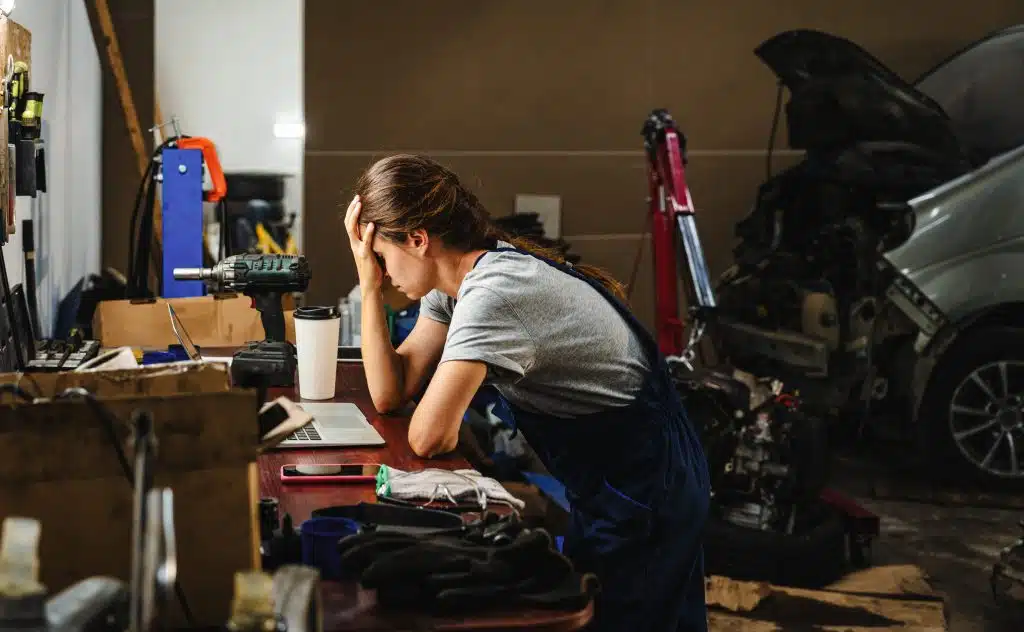
Yes – and more than most industries acknowledge. Students pursuing automotive, diesel, aviation, and other technical careers often carry a heavy load: tuition debt, long hours, physically demanding work, financial pressure, and the challenge of performing in a high-stakes learning environment. Mental health struggles are common, real, and nothing to be ashamed of.
The stigma around mental health in skilled trades runs deep. Shops and schools don’t always make it easy to say “I’m struggling.” But staying silent doesn’t make it better. It makes it harder to finish school, stay in the trade, and build the career you came here for.
This article is a no-judgment starting point. Whether you’re dealing with everyday stress, persistent anxiety, or something that feels much heavier, there’s support available – and you deserve to use it.
“What is the hardest part of your job, physically or mentally?” – One of the top questions TechForce students have submitted to working techs during live AMA sessions. The answer is almost never about the wrenches.
What Does Anxiety Look Like in a Technical Career?
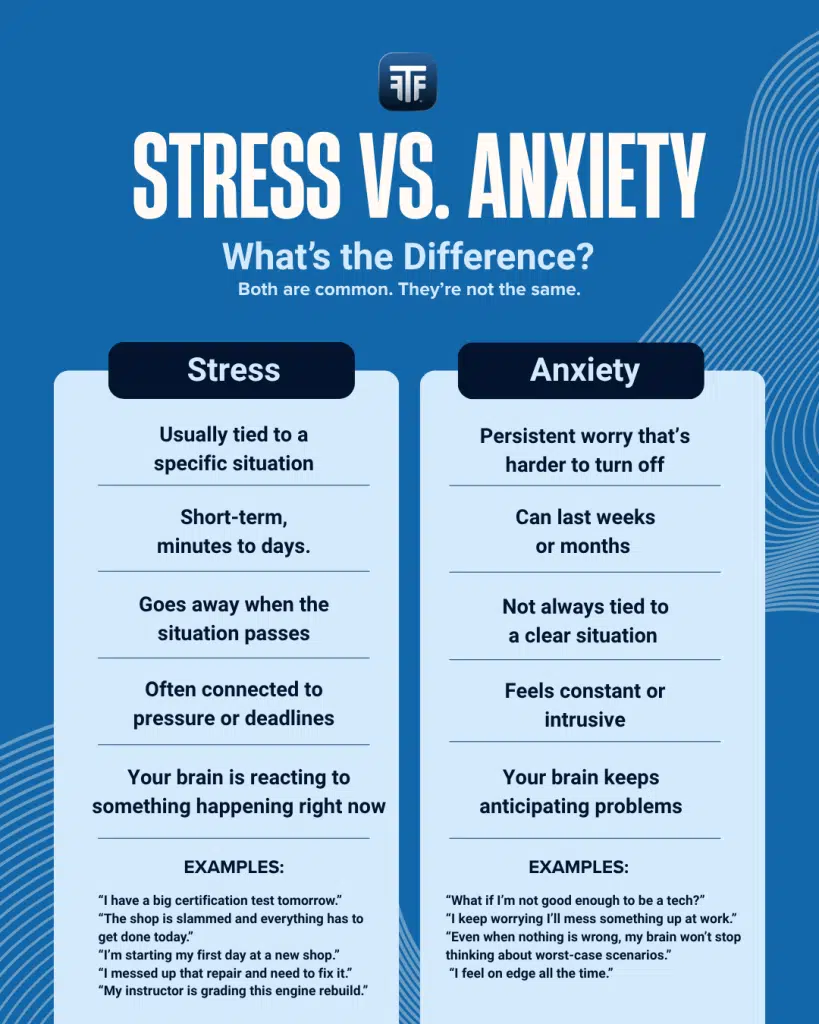
Anxiety isn’t always dramatic. In skilled trades and technical education, it often shows up quietly:
- Constant worry about making a mistake on the job or failing a course
- Dreading going to school or work even when things are going reasonably well
- Difficulty concentrating on diagnostics or technical procedures you normally know
- Physical symptoms like tension headaches, tight chest, upset stomach, or trouble sleeping
- Avoiding asking questions or speaking up because of fear of judgment
- Replaying interactions with instructors, coworkers, or customers over and over
High-pressure situations are built into a skilled career. Tight deadlines, complex repairs, demanding customers, and the constant expectation to perform can keep your nervous system in overdrive. For some students, that pressure becomes chronic anxiety that affects everything.
What About Depression?
Depression in students pursuing technical education often looks different from what people expect. It’s not always sadness. It can look like:
- Losing interest in the trade you used to be excited about
- Feeling flat or numb rather than visibly sad
- Low energy that sleep doesn’t fix
- Struggling to complete assignments or show up consistently
- Withdrawing from classmates, friends, or family
- Feeling like finishing school or building a career doesn’t matter anymore
These symptoms are not laziness, lack of motivation, or a sign that you chose the wrong career. They are signs that your brain needs support – the same way a misfiring engine needs a diagnostic, not a lecture.
Financial Stress Is a Mental Health Issue
Nearly every TechForce student entry mentions financial pressure. Paying tuition out of pocket, covering living expenses on an apprentice wage, supporting a family while going to school – this kind of sustained financial stress has real mental health consequences.
Chronic financial stress elevates cortisol, disrupts sleep, impairs focus, and increases the risk of anxiety and depression. It’s not weakness to struggle under that kind of pressure. It’s biology.
If financial stress is a major driver of what you’re feeling, there are direct resources available. TechForce offers scholarships, emergency grants, and other financial support specifically for students in technical education. Reducing the financial pressure is one of the most impactful things you can do for your mental health right now.
When Should You Seek Professional Help?
A good rule of thumb: if what you’re experiencing is interfering with your ability to function – at school, at work, or in your relationships – it’s time to talk to someone. You don’t have to be in crisis to deserve support.
Reach out to a professional if you are experiencing:
- Anxiety or depression that has lasted more than two weeks
- Thoughts of harming yourself or others
- Substance use that is increasing or feels out of control
- Panic attacks or physical symptoms with no clear medical cause
- An inability to get through your day without significant struggle
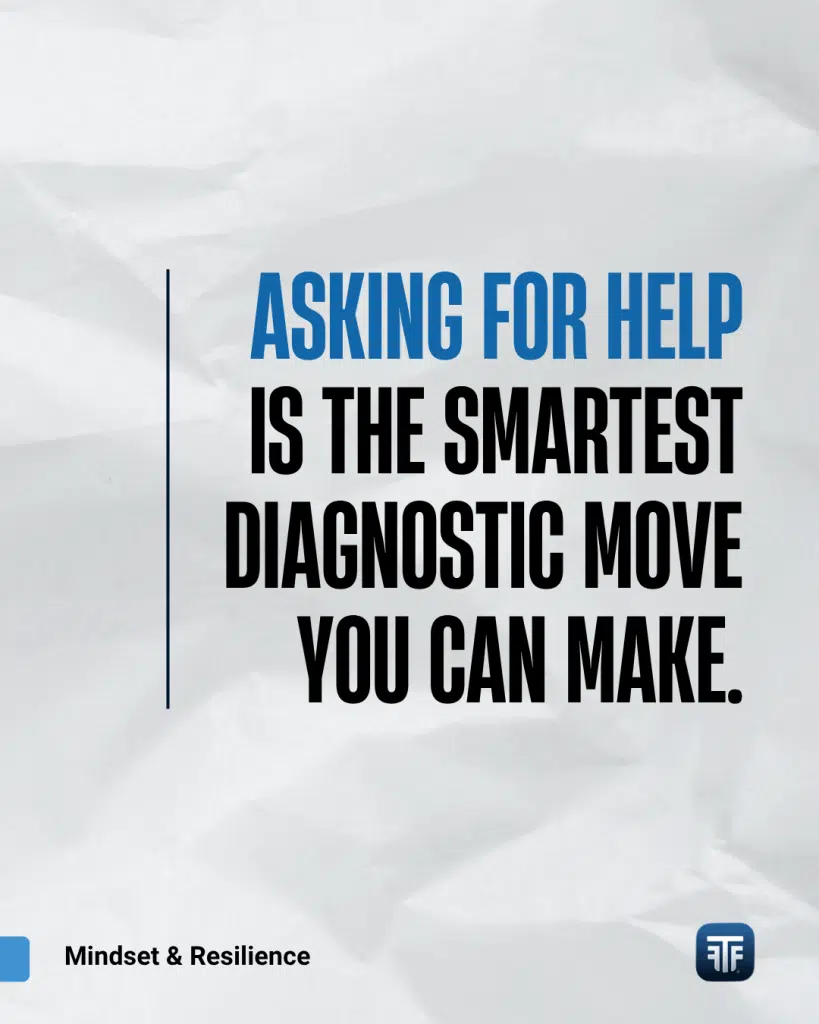
Reaching out is not giving up. It is the smartest diagnostic move you can make.
Mental Health Resources for Trade Students
These resources are free, confidential, and available to you right now. You do not need to be in immediate crisis to use them.
| Resource | How to Reach | What It Offers |
| 988 Suicide and Crisis Lifeline | Call or text 988 | Free, confidential, 24/7 support for anyone in crisis or emotional distress |
| Crisis Text Line | Text HOME to 741741 | Text-based crisis support, available 24/7 |
| SAMHSA Helpline | 1-800-662-4357 | Free mental health and substance use referrals and information |
| School Counseling | Visit your school’s student services office | Most technical schools have counselors available at no cost to enrolled students |
| TechForce Wraparound Services | TechForce.org | Community, mentorship, financial support, and connections to resources for students in technical careers |
Practical Ways to Manage Anxiety Day to Day
Professional support is the most important step for serious mental health concerns. For everyday anxiety and stress, these strategies help many techs stay grounded:
Name It
Identifying what you’re feeling – “I’m anxious about this diagnostic” or “I’m overwhelmed by my schedule” – takes power away from the feeling. Naming it is the first step to managing it.
Control What You Can
Anxiety feeds on uncertainty. Focus your energy on the things within your control: your preparation, your attitude, your effort. Let go, as much as possible, of what you can’t control.
Build One Consistent Routine
Consistency is calming to a stressed nervous system. A reliable sleep schedule, a regular meal, a short walk between school and work – even one predictable anchor in your day makes a difference.
Lean on Your Community
Isolation makes anxiety worse. Connecting with other students in skilled trades, finding a mentor through TechForce, or simply talking to one person you trust can break the cycle faster than trying to manage everything alone.
TechForce Support for Your Mental Health
TechForce Foundation’s Wraparound Services include resources that directly address the conditions that contribute to mental health struggles in technical education:
- Financial relief: Scholarships, emergency grants, and other financial resources to reduce financial pressure
- Mentorship: Connections to working techs who understand the real pressures of a technical career
- Life skills trainings: Sessions covering stress management, time management, and mental health awareness – all ranked by students
- AMA sessions: Open conversations with industry professionals about the hard parts of a skilled career
TechForce is not a mental health provider, but we are part of your support system. Visit TechForce.org to connect with the resources and community available to you.
The Bottom Line
Mental health support is not separate from career success. It is part of it. The students who finish technical school and build lasting skilled careers are not the ones who never struggled. They are the ones who got help when they needed it, stayed connected to their community, and kept showing up.
You are allowed to not be okay sometimes. You are also allowed to ask for help. Both of those things are true at the same time.
Sources & Further Reading
For more information on the topics covered in this article, we recommend the following resources:
- 988 Suicide and Crisis Lifeline: 988lifeline.org – free, confidential crisis support available 24/7 by call or text
- Crisis Text Line: crisistextline.org – free, confidential text-based crisis support, text HOME to 741741
- SAMHSA National Helpline: samhsa.gov – free mental health and substance use referrals, 1-800-662-4357
- National Alliance on Mental Illness (NAMI): nami.org – mental health education, support, and resources for individuals and families
American Psychiatric Association:psychiatry.org – clinical information on anxiety, depression, and when to seek professional help